
NHL Player and Team Prop Bets
 Available in US
Traditional hockey betting forces you into binary choices: which team wins, whether the total goes over or under, whether the favorite covers the puck line. Proposition bets shatter these constraints by offering hundreds of alternative outcomes to wager on within a single game. Will Connor McDavid score a goal tonight? Will the first period end with more than 1.5 goals? Will there be a shootout? Each question represents a prop bet, and each offers a different angle on the same game.
The popularity of prop betting has exploded over the past several years, driven by the same-game parlay features that sportsbooks have aggressively promoted. Bettors can combine multiple prop predictions into single tickets with amplified payouts, turning a routine Wednesday night game into an opportunity for significant returns. The engagement factor is undeniable: having action on whether a specific player scores makes watching that player’s every shift more compelling than simply rooting for a team outcome.
Props also offer analytical edges that traditional markets may not. While moneylines and totals attract massive betting volume and are priced efficiently by sharp money, player props often receive less attention and may contain mispricings that observant bettors can exploit. This guide covers everything you need to know about hockey prop bets in 2026, from the basic categories to the strategies that separate profitable prop bettors from those who are simply entertaining themselves.
Focusing on individual performances, such as shots on goal or total points, requires a deep understanding of NHL player prop betting dynamics and ice time allocation.
Analyzing Hockey Proposition Markets

Proposition bets are wagers on specific events within a game that do not directly determine the winner. Unlike moneylines, where your bet depends solely on which team wins, or totals, where only the combined score matters, props isolate individual components of the game and let you bet on them independently. This granularity creates opportunities for bettors with specialized knowledge to find value where generalists cannot.
Hockey props fall into three broad categories: player props, team props, and game props. Player props focus on individual statistical outputs like goals, assists, shots, and saves. Team props address collective performance metrics like total goals scored by one team or whether a team will score first. Game props cover situational outcomes like whether the game will go to overtime or which period will have the most goals. Each category requires different analytical approaches, and successful prop bettors typically develop expertise in one or two areas rather than trying to master everything.
How prop odds are set differs from traditional betting lines. For moneylines and totals, oddsmakers have decades of data and sophisticated models that produce highly efficient prices. Prop markets, especially player props, are newer and less liquid, meaning the pricing algorithms are less refined and the potential for mispricing is greater. Sportsbooks also adjust prop odds based on betting patterns, shortening odds on popular players regardless of whether those players actually offer value. The combination of less efficient pricing and public bias toward star players creates opportunities for bettors willing to fade the public and back less glamorous options.
The distinction between props and traditional bets extends to how you should think about bankroll allocation. Traditional bets on heavily traded markets involve relatively small edges, meaning you need significant volume to generate meaningful profits. Props can offer larger edges but come with higher variance because individual player outcomes are less predictable than team outcomes over a full game. A balanced approach allocates most of your bankroll to traditional markets where edges are smaller but more reliable, while reserving a portion for props where edges may be larger but less consistent.
Player Prop Bets
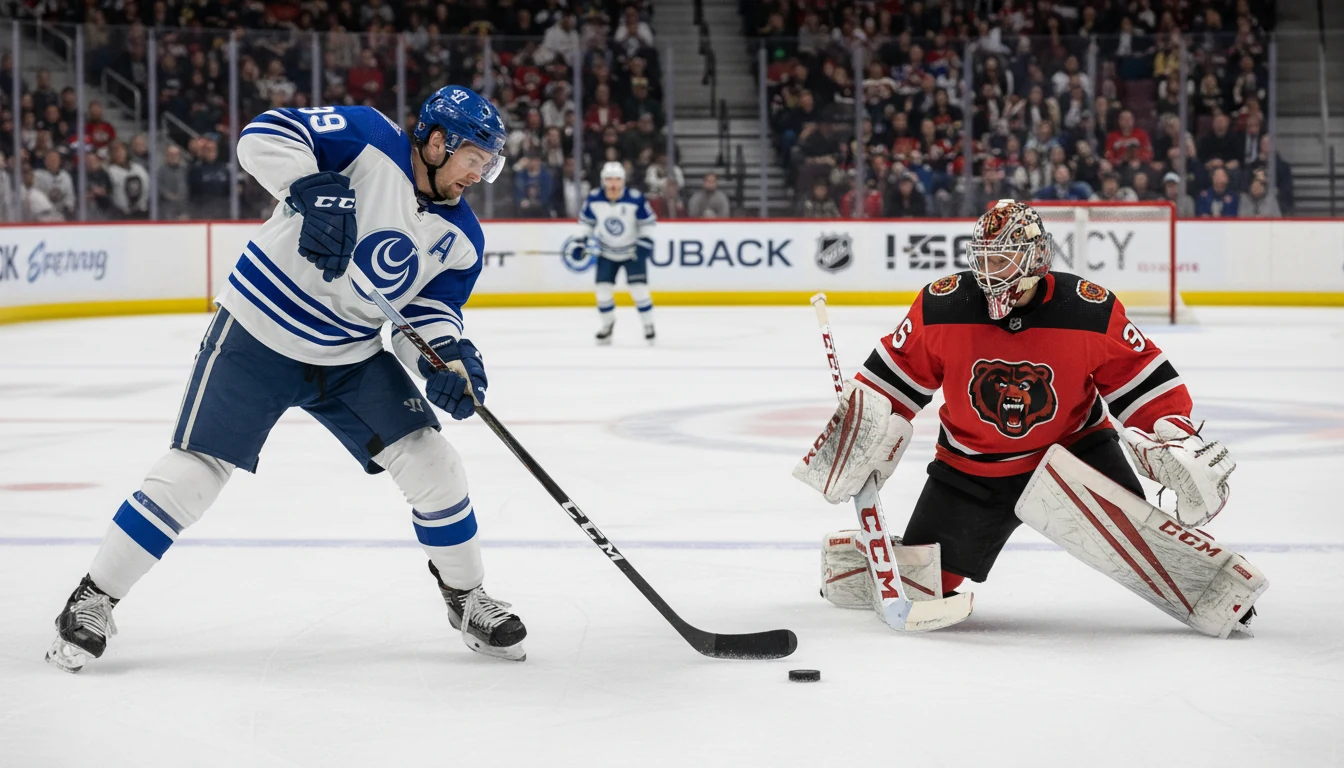
Player props form the largest and most popular category of hockey proposition betting, offering dozens of options for every game ranging from star scorers to backup goaltenders.
Goals scored props come in several varieties. Anytime goalscorer bets ask simply whether a player will score at least one goal in the game, with odds that vary based on the player’s scoring rate and the matchup. A 40-goal scorer might be priced around -120 to score anytime, while a defensive defenseman might be +800 or longer. First goalscorer bets pay significantly more because they require your player not only to score but to score before anyone else, adding another layer of difficulty. Last goalscorer bets work similarly but resolve to whoever scores the final goal, including empty-net goals that can create surprising outcomes. The pricing on goal props generally reflects historical scoring rates adjusted for the specific matchup, though public bias toward star players often shortens their odds beyond fair value.
Assists props have gained popularity as bettors recognize that playmaking is more consistent than goal scoring for many elite players. A player like Nikita Kucherov or Nathan MacKinnon might record an assist in 60% of games, making the over on 0.5 assists a high-probability bet even at juiced odds. Assists props are typically priced with a 0.5 line, asking whether the player records at least one assist or not. Some books offer higher lines like 1.5 assists for players capable of multiple-point games, though these bets require rarer outcomes and carry correspondingly lower win rates.
Points props combine goals and assists into a single market. A star player might have a line of 1.5 points, with the over requiring at least two points (any combination of goals and assists) and the under requiring one or zero. Points props smooth out some of the variance inherent in goal scoring, since a player can contribute without finishing the play himself. For consistent point producers, the over on 0.5 points can be a high-percentage play, though the odds are typically juiced heavily to reflect the high probability.
Shots on goal props ask whether a player will exceed or fall short of a set number of shots. A power forward who averages four shots per game might have a line of 3.5, with the over and under priced near even money. Shots props are appealing because they measure activity rather than results: a player can have a strong shooting game without scoring if the opposing goaltender plays well. This independence from goal outcomes reduces variance compared to goal scorer props. The key to shots props is understanding which players consistently generate high shot volumes and which matchups might inflate or suppress those totals.
Saves props for goaltenders set a line based on the expected shots faced. A goaltender playing against an offensive team might have a saves line of 28.5, while a goaltender facing a defensive team might be set at 24.5. The over on saves requires the opposing team to generate shots and the goaltender to stop most of them, which can create awkward situations where a blowout loss still cashes your saves over if the goaltender faced heavy volume. Conversely, a dominant defensive performance might result in a saves under if the goaltender was never tested.
Time on ice props, where available, let you bet on how many minutes a player will play. Star players typically see 20-22 minutes per game, while depth players might average 10-12 minutes. Factors like game flow, penalties, and blowouts affect ice time in ways that can be predicted: a team trailing late will lean heavily on their top players, while a team with a big lead might rest their stars. These props are less commonly offered than other player markets but can provide value when you have a strong read on how a game will unfold.
Team Prop Bets

Team props shift focus from individual players to collective outputs, offering markets that fall between player props and traditional team betting.
Team total goals ask whether a specific team will score over or under a set number. Unlike game totals, which combine both teams’ scoring, team totals isolate one side’s offense. A strong offensive team against weak goaltending might have a team total of 3.5, with the over offering value if you expect them to light up the opposing netminder. Team totals are useful when your analysis suggests one team will dominate scoring while the other will be held in check, a situation where the game total might be set at an awkward number but the individual team totals offer clearer value.
Team to score first props reward identifying which team will jump out to an early lead. Historical data shows that teams scoring first win approximately 65-70% of games, making this prop consequential beyond just the early entertainment value. The pricing typically reflects each team’s tendency to score first, adjusted for the matchup. Teams with strong first lines that start games, teams facing goaltenders who need time to find their rhythm, and home teams with energy from the opening face-off all have elevated probabilities of scoring first that may not be fully reflected in the odds.
Team to win each period props break the game into three separate competitions. You can bet on which team will win the first period outright, with a third option for a tie. Period betting isolates your analysis to a twenty-minute window rather than a full sixty minutes, which can be valuable when you believe a team will start strong but fade, or start slow but finish well. Some bettors specialize in first period props, identifying teams that consistently outperform in the early going regardless of game outcomes.
Shutout props ask whether a team will fail to score in the entire game. Being shut out is relatively rare in the NHL, occurring in roughly 8-12% of games depending on the teams involved. The odds on a team to be shut out are typically long, often +700 or higher, reflecting this rarity. The opposite bet, that a team will score at least one goal, is heavily juiced but offers near-certain probability. Shutout props offer value primarily when elite goaltending faces weak offense, or when a team is playing a backup goalie on the second night of a back-to-back against a rested opponent.
Power play goal props bet on whether a team will score at least one power play goal in the game. Teams average roughly 0.7 power play goals per game, meaning most games see at least one power play goal from one team or the other. The prop typically asks whether a specific team will convert at least one opportunity, with odds reflecting that team’s power play efficiency and the opponent’s penalty kill. If a team has an elite power play facing a struggling penalty kill, the yes on power play goal might offer value even at short odds.
Game Prop Bets
Game props address outcomes that depend on both teams’ performance and the game’s overall character rather than isolating one team or player.
First goal timing props ask when the first goal of the game will be scored, typically with brackets like under 5:00, 5:00-10:00, 10:00-15:00, 15:00-20:00, or no first period goal. Games between offensive teams tend to see early goals, while defensive matchups might remain scoreless deep into the first period. The pricing reflects historical distributions, but specific matchups can skew expectations. Two teams that play up-tempo, north-south hockey will likely produce an early goal, while two defensive teams that clog the neutral zone might take time to generate scoring chances.
Overtime props ask whether the game will go to overtime, typically a yes or no proposition. Approximately 23-27% of NHL games reach overtime, making the yes a significant underdog in any individual game. The odds usually price overtime yes around +300 to +350, reflecting this base rate. Value on overtime props emerges when two evenly matched teams with strong goaltending face off, as these games are more likely to remain close through regulation.
Shootout props go one step further, asking whether the game will be decided by a shootout specifically. Since the introduction of 3-on-3 overtime in 2015, shootouts occur in roughly 30-35% of games that reach overtime, meaning about 7-9% of all NHL games end in a shootout. The odds on shootout yes are typically long, around +700 to +900, but can offer value when two teams with elite goaltending face off.
Both teams to score props, sometimes called BTTS, ask simply whether both teams will find the net. Given that shutouts are rare, BTTS yes is a high-probability outcome, typically priced around -400 or shorter. The value lies on the no side, betting that one team will be shut out, which requires elite goaltending and either weak offense or a team playing their backup on tired legs. BTTS props are popular in soccer betting and have migrated to hockey, though the dynamic of hockey scoring makes the yes side far more likely than in soccer.
Winning margin props ask by how many goals the winning team will win. Options typically include one goal, two goals, three goals, or four or more goals. Since overtime games are decided by exactly one goal, the one-goal margin bracket includes both regulation one-goal wins and all overtime and shootout results. Two-goal margins are the most common regulation outcome, while three or more goals indicates a comfortable victory. Pricing reflects these distributions, with one-goal and two-goal margins typically favored over blowouts.
Highest scoring period props ask which of the three periods will produce the most goals. First periods often start slowly as teams feel each other out, second periods tend to see the most scoring as coaches make adjustments and fatigue has not yet set in, and third periods vary based on game state. If one team is trailing, the third period might see increased scoring as they push for a comeback, while a close game might see conservative play. Historical data suggests second periods have a slight edge in scoring, but specific matchups can override this general tendency.
Prop Betting Strategies

Moving from understanding prop types to profiting from them requires developing systematic approaches that identify value rather than simply betting on outcomes you hope will happen.
Research-driven prop betting starts with data collection. For player props, tracking individual player statistics over recent games reveals hot and cold streaks that the market might not fully price. A player who has scored in five straight games might have his goal prop priced shorter, but if his underlying shooting percentage is unsustainably high, the over might actually be a poor bet despite the recent results. Conversely, a player who has not scored in several games but is generating quality chances might offer value on the over if his drought reflects bad luck rather than diminished ability.
Finding value in player props often means fading public bias. Casual bettors love to bet on star players, which shortens their odds beyond fair value. The same casual bettors undervalue depth players, lengthening their odds beyond what their actual probability warrants. A third-line winger who consistently generates shots might offer better value on his shots prop than a superstar whose props are priced for public consumption. This does not mean always betting against stars, but rather evaluating every prop on its own merits rather than gravitating toward famous names.
Correlation in same-game parlays represents an advanced concept that can multiply edge or destroy it depending on execution. Correlated props are those where one outcome makes another more likely. If you bet the over on game total, a goal scorer prop on a player from either team is positively correlated because more total goals means more individual goals. Sportsbooks have become sophisticated at identifying and limiting correlation, but opportunities still exist. Betting a team to score first and their star player to score anytime creates positive correlation that the parlay odds may not fully capture. Conversely, betting one team’s goalie to get a shutout while also betting the over on saves creates negative correlation, since a shutout typically comes with lower shot volume.
Matchup analysis for props requires looking beyond individual player statistics to the specific opponent. A player who averages three shots per game might be a good over candidate against a team that allows high shot volumes but a poor over candidate against a stifling defensive team. Goaltender saves props depend heavily on whether the opposing offense generates lots of shots or focuses on quality over quantity. First goalscorer props should consider which line is likely to start the game and which goaltender might be slow to get into rhythm.
Building Prop Bet Parlays
Same-game parlays have become the signature product of modern sportsbooks, allowing bettors to combine multiple props from a single game into one high-payout ticket. Understanding how to construct these parlays intelligently separates strategic bettors from those buying lottery tickets.
Same-game parlay construction should start with a core thesis about how the game will unfold. If you believe the game will be high-scoring with one team dominating, your SGP might include the over on total goals, the dominant team’s player goal props, and perhaps a winning margin of two or more goals. Each leg should reinforce the same narrative rather than contradicting each other. An SGP that includes the under on total goals along with multiple anytime goalscorer props is internally inconsistent, since you need scoring to hit the player props but are betting against scoring on the total.
Correlated props within SGPs can work for you or against you. Sportsbooks have algorithms that detect correlation and adjust parlay odds accordingly, meaning you cannot simply exploit obvious correlations for free money. However, nuanced correlations that the algorithms miss might still offer edge. A goaltender facing a high-powered offense might have saves over and win both at reasonable prices, and these outcomes are positively correlated because the goaltender needs to face shots to record saves and needs to stop most of them to win. The algorithm might not fully capture this relationship, creating value in the parlay.
Risk management in prop parlays requires accepting that most parlays lose. The appeal of parlays is the payout multiplication, turning small stakes into large returns, but the probability of hitting decreases with each leg added. A two-leg parlay with each leg at 50% probability has a 25% hit rate. A four-leg parlay at the same individual probabilities has only a 6.25% hit rate. Sizing your prop parlay bets appropriately means betting small amounts that you can afford to lose repeatedly while waiting for the occasional winner to provide positive returns. Bettors who bet significant portions of their bankroll on parlays consistently go broke regardless of their analytical skill.
The house edge on parlays is typically higher than on straight bets because the multiplication of odds compounds the vig built into each leg. A -110 bet has roughly 4.5% vig, but a four-leg parlay of -110 bets has its vig compounded, resulting in higher total house edge. This mathematical reality means that parlays should only be placed when you believe the combination offers genuine value rather than simply wanting a bigger payout. If your edge on individual props is marginal, combining them into parlays amplifies the negative expected value rather than creating positive value through multiplication.
Where to Find the Best Prop Odds
Prop markets vary more across sportsbooks than traditional markets, making line shopping essential for serious prop bettors.
Comparing sportsbook prop offerings reveals that different books emphasize different markets. Some sportsbooks offer extensive player prop menus with dozens of options per game, while others provide only basic goal scorer and shots props. Books that specialize in props often have more competitive odds, while books that offer props as an afterthought may have less efficient pricing. Maintaining accounts at multiple sportsbooks lets you access the broadest range of props and find the best prices for any given bet.
Line shopping for props matters more than for traditional bets because the markets are less efficient. A player’s shots prop might be set at 3.5 at one book with the over at -115 and the same player at another book with the over at +100. That fifteen-cent difference represents significant value over many bets. The time investment in checking multiple books before placing each prop bet pays dividends that accumulate over a season. Some bettors use odds comparison websites that aggregate prop lines, though these tools are less comprehensive for props than for main markets.
Prop availability differences across books affect your ability to bet on specific outcomes. Smaller sportsbooks might not offer saves props or time on ice props at all, while larger books provide comprehensive menus. During playoffs, prop availability typically increases as betting interest rises and books expand their offerings. New prop types emerge regularly as sportsbooks experiment with markets that might attract action, so staying aware of what each book offers keeps you positioned to find value wherever it exists.
The timing of prop line releases also varies. Some books post props the night before games, while others wait until morning or even afternoon. Early lines may be softer because they have not yet been shaped by sharp betting, while later lines are more efficient but may move if significant information emerges. Knowing each book’s schedule helps you plan when to check for value and when to place your bets.
Developing Your Prop Betting Approach

Building a sustainable prop betting practice requires finding your niche, tracking your results, and continuously refining your methods based on evidence.
Specialization typically outperforms generalization in prop betting. Rather than trying to handicap every prop type, focusing on one or two categories where you have developed expertise produces better results. If you closely follow specific players and understand their game, player props for those players might be your edge. If you analyze team tendencies and coaching patterns, period props or team total props might suit your strengths. Depth of knowledge in a narrow area beats superficial knowledge across all markets.
Tracking results by prop type reveals which bets are actually profitable and which are losing you money despite feeling like good bets. Many bettors discover that their player props are profitable while their game props lose, or vice versa. Without tracking, you cannot distinguish between skilled analysis and lucky streaks. A simple spreadsheet recording each prop bet, the odds, and the outcome provides the data necessary to evaluate your performance honestly.
Adjusting based on evidence means changing your approach when results indicate it is not working. If your first goalscorer bets have lost money over a meaningful sample, either improve your analysis or stop betting that market. If your shots props consistently profit, consider increasing allocation to that market. The willingness to abandon losing strategies and double down on winning strategies separates improving bettors from those who repeat the same mistakes indefinitely.
The entertainment versus profit tradeoff is worth acknowledging. Many bettors enjoy props because they create engagement with individual players and specific game situations, regardless of profitability. There is nothing wrong with betting props for entertainment value if you recognize that is what you are doing and size your bets accordingly. Problems arise when bettors convince themselves they have edge while actually just enjoying the action, leading to bankroll depletion that could have been avoided with honest self-assessment.
Conclusion
Hockey prop bets offer a diverse array of wagering opportunities beyond traditional moneylines and totals. Player props let you bet on individual performances, team props focus on collective outputs, and game props address situational outcomes that depend on how the overall contest unfolds. Each category presents different analytical challenges and different opportunities for finding value.
The strategies for profitable prop betting center on research, specialization, and disciplined execution. Understanding how props are priced, recognizing where public bias creates mispricings, and constructing parlays that reinforce rather than contradict your thesis improves results over time. Line shopping across sportsbooks captures value that betting with a single book would miss.
Props are not a shortcut to easy profits. The markets have grown more efficient as betting volume has increased, and the house edge on parlays remains significant. But for bettors willing to develop expertise in specific markets and maintain the discipline to bet only when genuine value exists, props provide opportunities that traditional markets cannot match. The engagement they create with individual players and specific game situations adds enjoyment to watching hockey, which might be worth something even when the betting results are mixed.
Find the most accurate statistical breakdowns and daily tips on our top hockey betting site.
