
NHL Betting Systems & Strategies
 Available in US
Hockey betting occupies a strange space in the sports wagering ecosystem. It attracts less attention than football or basketball, which means the markets are often less efficient and more exploitable. At the same time, the sport’s inherent randomness, where a bouncing puck can change everything, makes winning consistently more challenging than the typical bettor expects. The bettors who profit from NHL wagering over the long term are those who combine systematic analysis with disciplined execution, rather than relying on gut feelings or chasing recent results.
What makes hockey unique for betting purposes starts with goaltending. No other major sport has a single player who touches the ball or puck on virtually every opponent’s scoring chance. A hot goalie can steal a series for a team that has no business winning, while a cold goalie can doom a legitimate contender. Understanding this dynamic, and knowing how to incorporate it into your betting process, is where strategy begins.
Beyond goaltending, NHL betting rewards those who pay attention to scheduling, travel, and rest disparities. The league’s condensed schedule creates situations where teams play three games in four nights while crossing time zones, and these spots affect performance in measurable ways. Add in advanced analytics that have revolutionized how teams are evaluated, and you have a betting landscape where information edges still exist for those willing to do the work. This guide walks through the strategies that sharp bettors use to gain an edge on the NHL betting market.
To ensure long-term profitability with these systems, you must implement strict NHL bankroll management strategies to protect your funds during losing streaks.
Goaltender Analysis for NHL Bettors
Goaltenders influence hockey outcomes more than any single player in team sports. A goalie faces 25 to 35 shots per game, and the difference between a 92% save percentage and a 90% save percentage over those attempts is one or two goals. That margin frequently decides games. Anyone betting on hockey without incorporating goaltender analysis is essentially ignoring the most predictive single variable available.
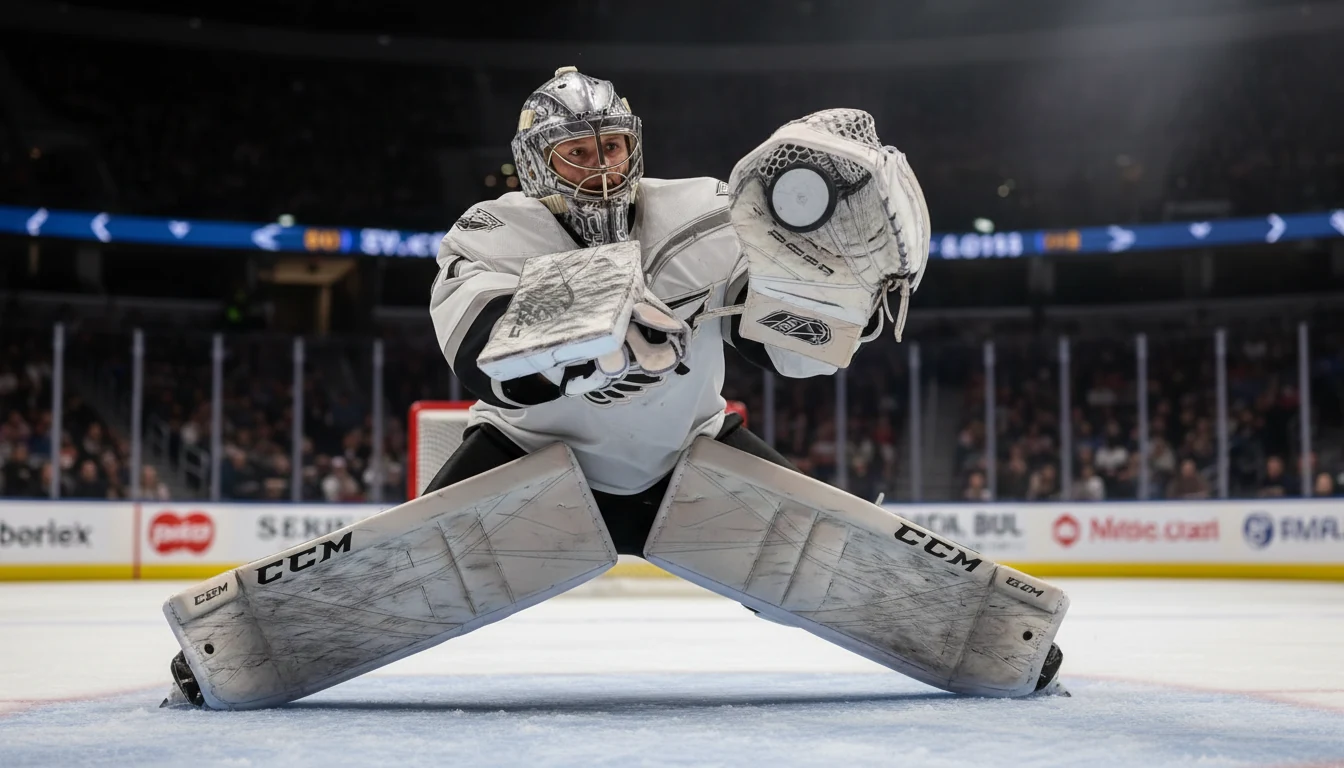
The key statistics for evaluating goaltenders start with save percentage, which measures the proportion of shots stopped. League average save percentage in 2025-26 hovers around 90%, meaning a .910 goalie is slightly above average while a .920 goalie is elite. Goals saved above average, sometimes called GSAA or GSAx when based on expected goals models, measures how many goals a goalie has prevented compared to what an average goalie would have allowed facing the same shots. This context-adjusted metric identifies goalies who are genuinely outperforming their teammates’ defensive play versus those who simply face fewer high-danger chances.
Starting goalie confirmation timing matters enormously for betting strategy. Most NHL teams announce their starters in the morning of game day, typically between 10 AM and noon Eastern time. Betting before this confirmation means accepting uncertainty about who will be in net, and the difference between a starter and backup can swing a game’s probability by 5-10%. Sharp bettors wait for confirmation before placing their wagers, which sometimes means missing early line value but avoiding the risk of backing a team when their backup unexpectedly gets the start.
Backup goalie situations provide some of the clearest betting edges in hockey. Teams playing the second game of a back-to-back almost always start their backup goaltender, and the quality gap between starters and backups is substantial across the league. A team with a .925 starter might have a .890 backup, and that 35-point difference in save percentage translates directly into expected goals against. Identifying spots where a backup is likely to start, especially when the opposing team is rested with their starter confirmed, creates systematic value.
Schedule and Situational Analysis
The NHL schedule is brutal compared to other major leagues. Teams play 82 regular season games in roughly 180 days, often with back-to-back nights, cross-country travel, and stretches of four games in six nights. These scheduling demands create fatigue disparities that affect performance in predictable ways.

Back-to-back games provide the clearest scheduling disadvantage. Teams playing their second game in two nights show measurably worse performance across multiple metrics: lower shot volume, higher goals against, and reduced special teams efficiency. The impact is most pronounced when the back-to-back involves significant travel, such as playing in Vancouver on Saturday night and then flying to Los Angeles for a Sunday matinee. These spots consistently favor the rested home team, and betting against tired road teams has been profitable over multiple seasons. The 2025-26 season has seen teams on zero days rest winning approximately 42% of games, a meaningful drop from the 50% baseline.
Road trip fatigue extends beyond back-to-backs. A team playing game four or five of an extended road trip faces cumulative exhaustion that builds over days. Sleep quality suffers in hotels, practice time decreases, and the mental burden of being away from home compounds physical fatigue. When these teams face a rested home opponent, the scheduling edge can reach 3-5% in win probability beyond what the pure talent comparison would suggest. Advanced bettors track days of rest, time zone changes, and road trip length as standard inputs in their handicapping process. Some maintain spreadsheets that calculate exactly how many miles each team has traveled in the past week and how many time zones they have crossed.
Rest advantage scenarios flip the calculation. When one team has had three or four days off while their opponent played yesterday, the rested team has a significant edge that the betting market sometimes underprices. The tricky part is that excessive rest can also be a disadvantage, as teams that have not played in a week may be rusty and take a period to find their rhythm. The optimal rest is typically two to three days, with one day being insufficient recovery and five or more days leading to sharpness concerns. Playoff scenarios complicate this further, where teams sweeping their first-round opponent often lose their conference semifinal opener to teams that played a grueling seven-game series but have momentum and game fitness.
Revenge game situations receive attention from casual bettors, but the evidence for systematic revenge game value is weak. Teams do not consistently outperform expectations when facing an opponent that recently beat them badly. What does matter is the previous meeting’s context: if a team was missing key players in the first matchup, their return creates genuine improvement that may be underpriced. Similarly, if a team was badly outplayed in the underlying metrics but won on goaltending luck, expecting regression in the rematch is reasonable.
Using Advanced Hockey Analytics
Hockey analytics have matured significantly over the past decade, and the same statistics that front offices use to evaluate players are available to bettors who want to dig deeper than goals and assists.

Corsi measures all shot attempts, including shots on goal, missed shots, and blocked shots. Corsi For percentage, or CF%, represents the share of total shot attempts that a team generates while at five-on-five strength. A team with 55% CF% is controlling possession and generating more scoring opportunities than they allow. Over time, CF% correlates strongly with winning percentage, making it a useful indicator of team quality that is less noisy than goal-based measures. Goals involve significant luck in any small sample; shot attempts reflect underlying process regardless of whether the puck finds the net. Teams that sustain 53%+ Corsi over months tend to be playoff teams, while teams stuck below 47% typically struggle.
Fenwick is similar to Corsi but excludes blocked shots, measuring only shots on goal plus missed shots. Some analysts prefer Fenwick because blocking a shot requires defensive effort and positioning, whereas a shot missing the net entirely reflects poor execution by the shooter. In practice, Corsi and Fenwick correlate highly and either serves as a reasonable proxy for possession dominance. The choice between them rarely changes conclusions about which team is controlling play.
Expected goals models represent the current frontier of hockey analytics. These models assign a probability to each shot based on its location, angle, shot type, whether it came off a rebound or rush, and other factors. A shot from the slot after a cross-ice pass might be worth 0.25 expected goals, while a shot from the point through traffic might be worth 0.03. Summing these values produces expected goals for and expected goals against totals that indicate how many goals a team should have scored or allowed based on the quality of chances they generated and conceded. Multiple expected goals models exist with slightly different methodologies, but all capture the fundamental insight that not all shots are equal.
Applying these analytics to betting requires understanding their predictive limitations. Expected goals models describe what should happen based on shot quality, but goaltending and finishing talent create persistent deviations from expectations. A team with elite goaltending will consistently outperform their expected goals against, and this is not luck but rather a skill that should be expected to continue. Similarly, teams with elite finishers like Connor McDavid or Auston Matthews convert chances at rates above model expectations year after year. The betting edge comes from identifying teams where the market is reacting to goal-based results while ignoring underlying process metrics that suggest regression is coming. A team that has been winning close games despite being outplayed in expected goals is due for negative regression; a team losing close games while dominating expected goals is likely to improve.
Home Ice Advantage in NHL Betting
Home ice advantage exists in the NHL, but its magnitude is smaller than many bettors assume. Understanding when home ice matters and when it does not separates informed bettors from those operating on outdated assumptions.
The statistical reality of home ice advantage shows that NHL home teams win approximately 53-54% of games in the regular season. This edge comes from last change, which allows home coaches to match favorable line combinations, supportive crowd energy, and familiarity with arena-specific factors like ice dimensions and glass bounce. The advantage is real but modest, translating to roughly 0.25 to 0.3 goals per game.
When home ice matters most depends on the context. Divisional games between playoff teams see slightly elevated home advantages because the crowds are more engaged and the coaching chess match around last change becomes more meaningful. Games against conference opponents from different time zones show home advantage when the visitor is dealing with jet lag. Playoff games show significantly higher home ice advantage than regular season games, as the intensity and crowd involvement reach levels that the regular season rarely matches.
When home ice advantage shrinks or disappears, bettors can find value by backing road teams that the market has discounted too heavily. Early season games before fan bases are fully invested show minimal home advantage. Games between teams with vastly different talent levels are decided by skill rather than venue. Non-playoff teams in the final weeks of the season often see attendance and energy drop, reducing the typical home boost. Identifying these spots allows bettors to back road favorites or road underdogs at better prices than their true probability warrants.
The playoffs versus regular season distinction deserves emphasis. Home teams in the Stanley Cup Playoffs win approximately 55-57% of games, a meaningful increase over regular season rates. The increased urgency, hostile crowds, and importance of every possession create an environment where home ice provides genuine leverage. Betting strategies that worked in the regular season may need adjustment when June arrives.
Line Movement and Sharp Money
Understanding line movement helps bettors identify where informed money is landing and time their wagers for optimal prices.
Reading line movements requires establishing a baseline. Lines typically open when sportsbooks post them, often the night before or morning of games, and then move based on betting action. If a team opens at -150 and moves to -170 within a few hours, heavy betting on that side has forced the sportsbook to adjust. The question is whether that action represents sharp money, meaning informed bettors with demonstrated winning records, or public money, meaning recreational bettors following their favorite team or a television narrative.
Sharp money moves lines early and decisively. Professional bettors have access to opening lines and strike quickly when they identify value, before the market can correct. If a line moves significantly within the first hour of posting, sharp action is likely driving the movement. Public money arrives later, typically after noon on game day when casual bettors check their apps, and tends to favor favorites, home teams, and teams with star players regardless of the actual matchup dynamics.
Following sharp money requires access to line tracking tools or simply monitoring movements across multiple sportsbooks. When lines move in the same direction across the market, coordinated sharp action is usually responsible. When one book moves differently than others, it may be reacting to lopsided house exposure rather than informed betting. Some bettors use reverse line movement, where heavy public betting on one side coincides with the line moving the other direction, as a signal to back the unpopular side.
Best timing to place bets depends on your assessment of where value lies. If you believe the opening line is incorrect and sharp money will move it against you, bet early before the correction. If you believe public money will push the line in an unfavorable direction, wait for that movement and then bet the other side. For most recreational bettors, the simplest approach is betting once goaltender confirmation is announced, as this removes the primary uncertainty while still providing time to find the best available price.
Regular Season vs. Playoff Betting
The NHL regular season and playoffs are almost different sports from a betting perspective. Strategies that produce profits from October through April may lose money in May and June if bettors do not adjust their approach.
How playoffs change team strategies starts with effort and intensity. Regular season games, especially in November or January, see teams managing energy for the long haul. Stars might take shifts off, teams might not backcheck hard in the second period of a blowout, and overall desperation is limited. Playoff hockey eliminates this coasting. Every shift matters, every puck battle is contested, and the skill gap between teams narrows because both sides are playing near their maximum capability.
Lower scoring in the postseason is a consistent trend that affects totals betting and puck line approaches. Stanley Cup Playoff games average approximately 0.5 fewer goals than regular season games, as teams tighten defensive structures and goaltenders elevate their performance. Referees also tend to swallow their whistles in the playoffs, resulting in fewer power play opportunities. Betting unders in the playoffs has historically shown edge, though the market has partially adjusted to this tendency.
Series betting approaches differ from game-by-game wagers. When betting on who wins a playoff series, rather than individual games, you are essentially betting on the better team winning four games before their opponent does. Home ice advantage becomes more meaningful in series context because the team with home ice hosts games one, two, five, and seven if necessary. Pricing series bets requires understanding how individual game probabilities compound over a potentially seven-game sample.
Adjusting game-by-game strategies for playoffs includes respecting home ice more heavily, lowering totals expectations, and recognizing that underdogs perform better than regular season patterns suggest. The intensity equalization means that talent gaps translate less directly into game outcomes, and fluky bounces in a single elimination-style format can determine who advances regardless of which team is actually superior.
Underdog Betting Strategies
NHL underdogs win outright more frequently than underdogs in most other sports, making them a systematic betting opportunity when approached correctly.

Value in NHL underdogs stems from hockey’s inherent variance. A single period of opportunistic scoring can flip a game regardless of which team controls possession. Goaltenders can stand on their heads and steal games for outmatched teams. The three-period structure means that a team falling behind early still has substantial time to recover, unlike football where early deficits in close games often prove insurmountable.
Identifying situational underdogs goes beyond looking at which team the odds makers have listed as the dog. The best underdog opportunities emerge when a clearly inferior team catches a scheduling break against a superior team in a letdown spot. If a contender just finished an emotional overtime win against their rival and now faces a non-playoff team on the second night of a back-to-back, that contender is vulnerable despite being the better team overall.
Specific underdog spots that have shown historical value include road underdogs getting plus money against tired home favorites, underdogs with strong goaltending facing offensively limited opponents, and divisional underdogs in games where intensity levels should be even. The common thread is finding games where the talent gap is narrow and the situational factors slightly favor the worse team on paper.
Puck line underdog strategy provides value even when you expect the underdog to lose. Taking a moderate underdog at +1.5 when you believe the game will be close but the favorite will ultimately win can be more profitable than the moneyline. If you assess that an underdog has a 40% chance of winning outright but the market offers +1.5 at -115 implying only 53% coverage probability, the puck line bet offers positive expected value despite expecting your team to lose.
Bankroll Management for Hockey Bettors
Sustainable hockey betting requires bankroll discipline that accounts for the sport’s inherent variance and the volume of games available.
Unit sizing recommendations typically suggest risking between 1% and 3% of your total bankroll per bet. For hockey, where the most confident edges are rarely dramatic and variance can create long losing streaks even with sound strategy, staying at the lower end of this range preserves capital for the inevitable cold spells. A 2% unit size allows you to weather a 10-game losing streak, which will happen eventually regardless of skill, without catastrophic damage to your bankroll.
Seasonal bankroll planning recognizes that the NHL offers roughly 1,300 regular season games plus playoff games. Betting a significant percentage of these creates massive variance exposure. Many successful hockey bettors limit themselves to games where they have identified specific edges rather than betting the full slate. Quality over quantity prevents the slow bleed of marginal bets that dilute the impact of your best selections.
Avoiding common bankroll mistakes includes never chasing losses by increasing unit size, never betting money you cannot afford to lose, and never allowing a single bad night to derail a season of profitable betting. The psychological temptation after a losing streak is to bet bigger on the next strong play to recover quickly, but this approach turns a manageable drawdown into a bankroll-ending disaster when the next bet also loses.
Tracking results with honest assessment separates improving bettors from stagnant ones. Recording every bet, including the reasoning behind it, allows you to review which types of plays produce profits and which types produce losses. If your underdog bets are profitable but your favorite puck line bets are losing money, adjusting your strategy based on data rather than intuition accelerates improvement.
Putting It All Together
Winning at NHL betting requires synthesizing multiple information sources into betting decisions that offer positive expected value. No single strategy works in isolation, and the best bettors combine goaltender analysis, scheduling awareness, advanced statistics, and market understanding into a cohesive approach.

The practical workflow starts with identifying games where you have a genuine opinion on the outcome. This means checking confirmed goaltenders, reviewing schedule spots for both teams, examining underlying metrics like expected goals, and noting any injury news that affects the matchup. Games where you lack strong conviction should not receive action.
Once you have identified potential plays, shopping for the best available line maximizes value. A half-point of odds improvement on every bet compounds significantly over a season. Line shopping takes minimal effort with modern comparison tools and can be the difference between a winning and losing record at similar win rates.
Finally, betting with discipline means accepting that losses are inevitable and that no strategy works every night. The goal is positive expected value over hundreds of bets, not winning any individual game. Maintaining emotional equilibrium during losing streaks, resisting the urge to deviate from proven processes, and constantly learning from both wins and losses characterizes the mindset of successful hockey bettors.
Conclusion
NHL betting offers opportunities for informed bettors willing to put in analytical work that the casual public avoids. Goaltender analysis provides the most impactful single input, while scheduling awareness identifies spots where fatigue creates edges. Advanced statistics like Corsi and expected goals measure underlying team quality better than raw goals, and understanding line movement helps time bets for optimal prices.
The strategies outlined here are starting points rather than guarantees. Markets evolve, and approaches that worked five years ago may be arbitraged away by now. Staying curious, tracking results honestly, and adjusting based on evidence keeps bettors ahead of the curve. Hockey rewards those who respect its randomness while systematically exploiting the edges that do exist.
Discover more expert predictions and daily odds analysis on the premier ice hockey betting platform.
