
NHL Puck Line Betting Strategies
 Available in US
If you have spent any time betting on basketball or football, point spreads feel like second nature. Then you walk into hockey betting, and someone throws the term puck line at you like everyone should already know what it means. The reality is that puck line betting is one of the most misunderstood concepts in hockey wagering, even among people who have been betting on NHL games for years.
The puck line is hockey’s answer to the point spread, but it operates differently than what you might expect from other sports. Unlike football, where spreads can range anywhere from 1 to 20 points depending on the matchup, hockey keeps things standardized at 1.5 goals. Understanding why this number exists and how to exploit it separates casual bettors from those who consistently find value in the market. This guide breaks down everything you need to know about puck line betting in 2026, from basic mechanics to advanced strategies that sharp bettors use.
If you are new to the 1.5-goal spread, we highly recommend reading how puck line betting is explained in detail before placing your first wager.
Hockey Puck Line Spreads Explained
The puck line is hockey’s version of a point spread, fixed at 1.5 goals in most North American sportsbooks. The favorite is listed at -1.5, meaning they must win by at least two goals for the bet to cash. The underdog sits at +1.5, meaning they can lose by one goal and still win the bet. If the underdog wins outright or the game goes to overtime, the +1.5 bet is a winner regardless of the final score.
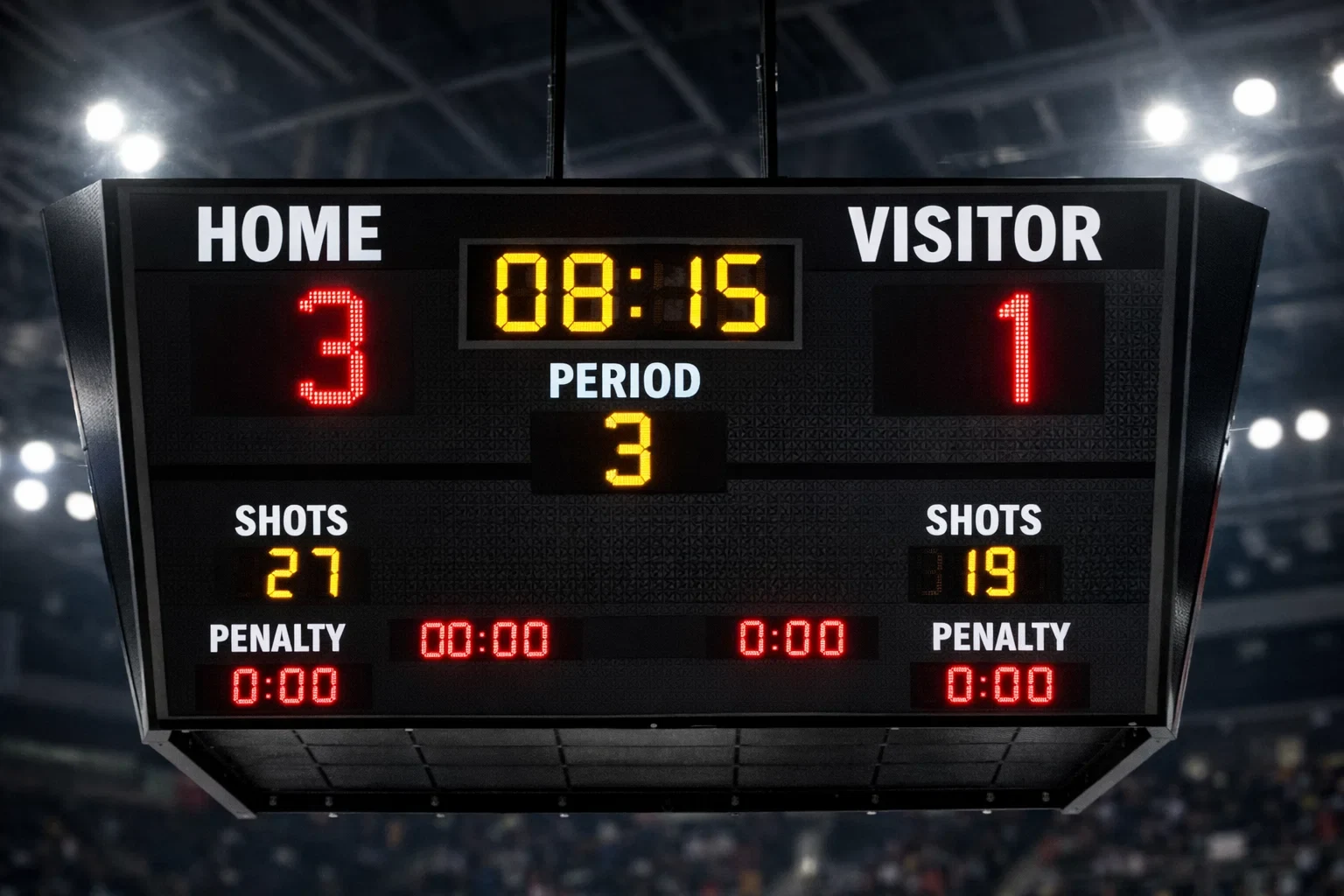
This fixed spread exists because hockey is fundamentally different from higher-scoring sports. The average NHL game in the 2025-26 season has seen around 6.2 total goals, which means most games finish with a margin of one or two goals. A three-goal victory feels like a blowout in hockey, whereas it barely registers in basketball. Setting a variable spread would create awkward lines that would need to be -0.5 for close games or -2.5 for heavy mismatches, neither of which provides meaningful differentiation from the moneyline.
The 1.5-goal standard also reflects the strategic reality of NHL games. Teams trailing late in the third period pull their goaltender for an extra attacker, and this desperation move frequently leads to either a game-tying goal or an empty-net goal that extends the lead. That final-minute chaos makes the difference between a one-goal and two-goal margin highly unpredictable, which is precisely why the puck line captures so much betting interest.
When comparing the puck line to point spreads in other sports, the key distinction is juice adjustment rather than spread adjustment. In football, oddsmakers move the spread from -3 to -3.5 to balance action. In hockey, the spread stays at 1.5 while the odds attached to each side fluctuate. You might see a heavy favorite at -1.5 with -120 juice, while a slight favorite could be -1.5 at +180.
How Puck Line Betting Works
Understanding the mechanics of puck line betting requires looking at both sides of the line separately, because the risk-reward profile differs dramatically depending on whether you are laying the 1.5 goals or taking them.
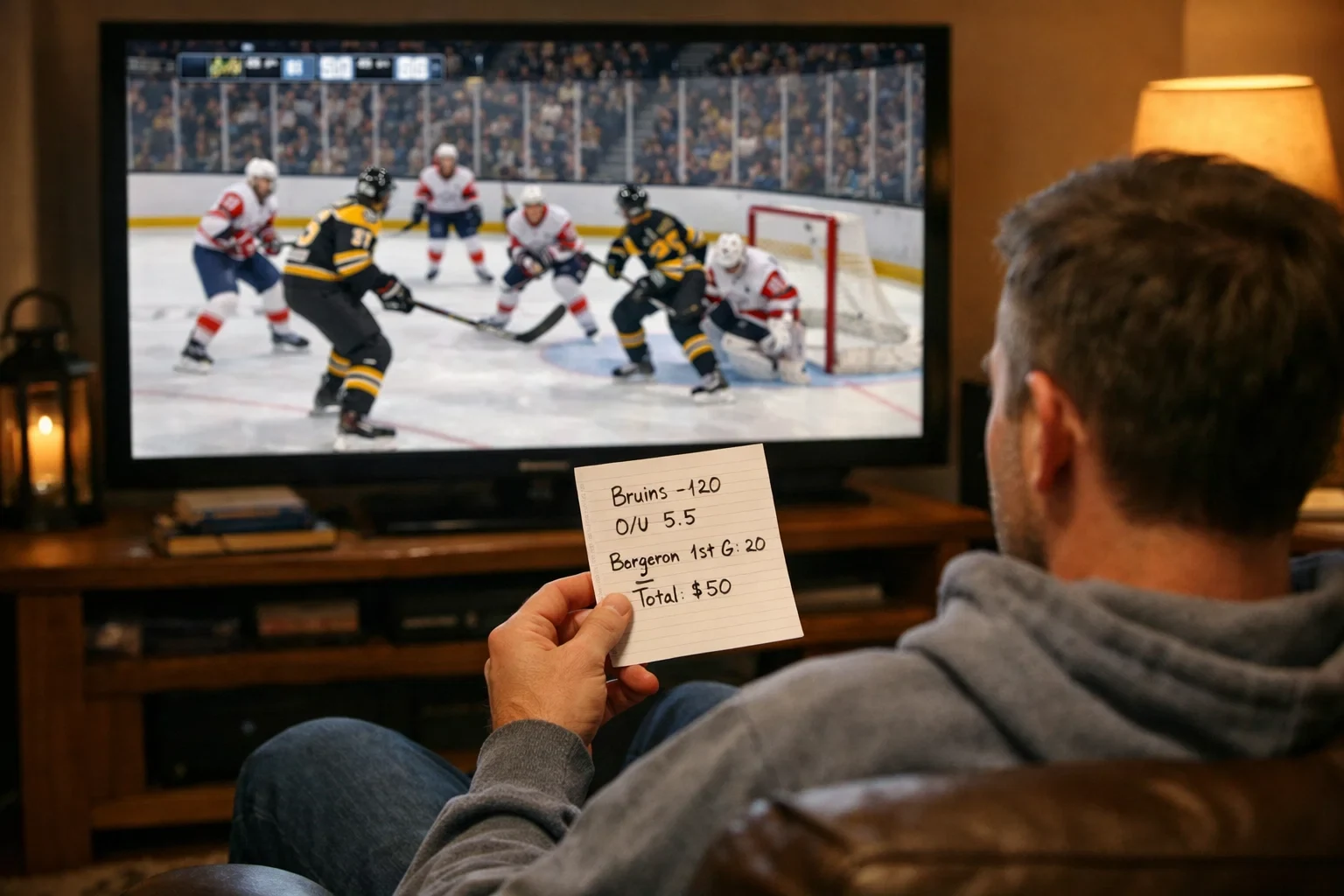
When you bet on the favorite at -1.5, you need that team to win by two or more goals. If the Edmonton Oilers are -1.5 against the Anaheim Ducks and they win 4-2, your bet cashes. If they win 3-2, whether in regulation or overtime, your bet loses. Because requiring a two-goal victory is harder than simply picking the winner, the odds on the favorite are more attractive. That same Oilers team might be -240 on the moneyline but only -115 on the puck line.
The underdog at +1.5 represents the opposite proposition. If you take the Ducks at +1.5, you win if Anaheim wins outright, if the game goes to overtime, or if the Ducks lose by exactly one goal in regulation. The only way you lose is if the Oilers win by two or more goals. A team that is +280 on the moneyline might be -180 at +1.5, because the extra cushion dramatically improves their chances of covering.
A practical example clarifies the payout structure. Suppose the Toronto Maple Leafs are -1.5 (-125) against the Montreal Canadiens at +1.5 (+105). If you bet $125 on Toronto at -1.5 and they win 5-2, you profit $100. If Toronto wins 2-1 in overtime, you lose your $125 stake despite Toronto winning the game. On the Montreal side, a $100 bet at +1.5 (+105) wins $105 if the Canadiens win outright, lose 3-2 in regulation, or lose in overtime.
Puck Line vs. Moneyline: Key Differences
The decision between puck line and moneyline betting depends entirely on your assessment of the matchup and your tolerance for variance. Neither approach is universally superior, but understanding when each option provides value separates strategic betting from coin-flipping with extra steps.
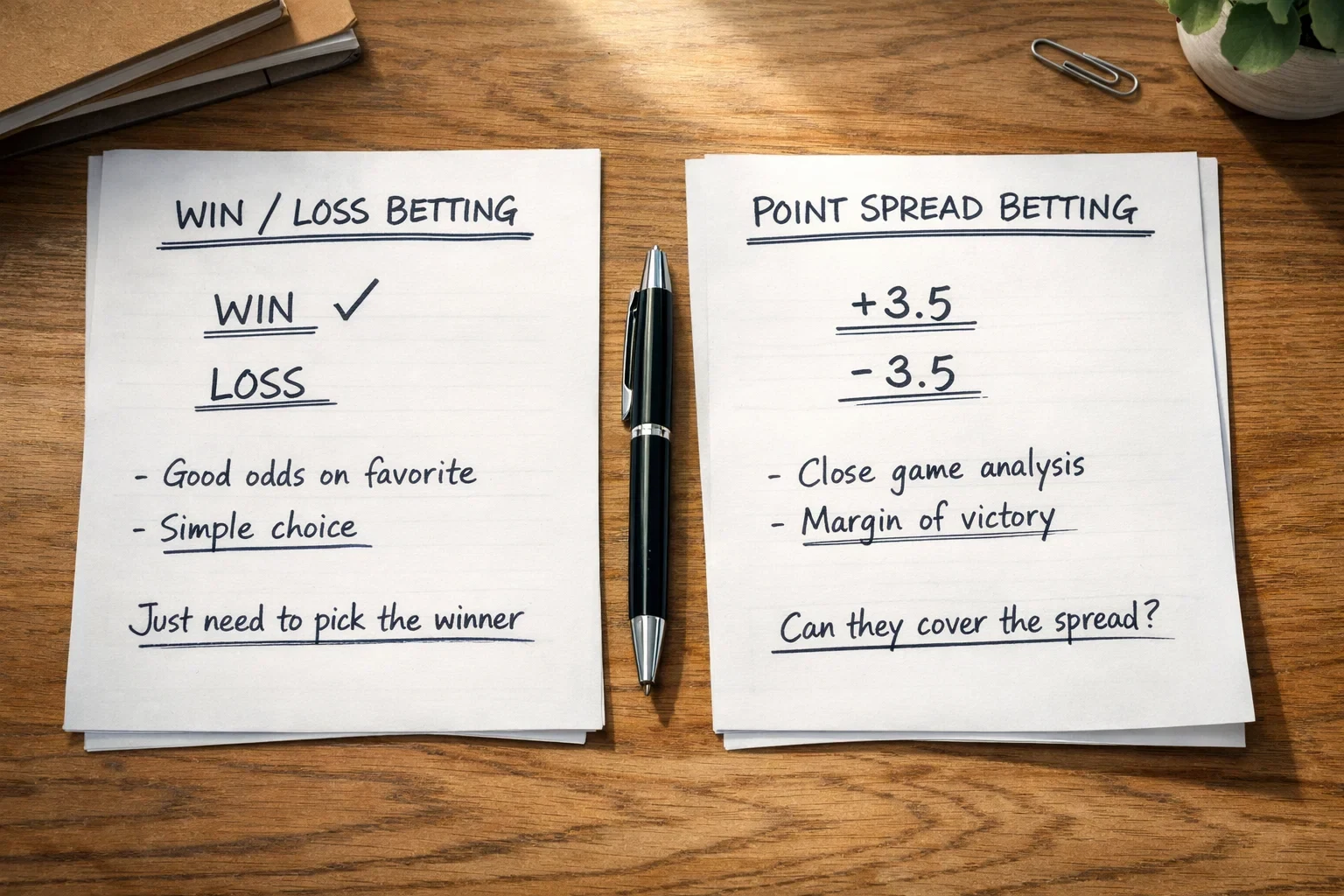
Moneyline betting is straightforward: pick the winner, collect if you are right. The downside is that heavy favorites require significant risk for modest returns. Laying -280 on a moneyline means risking $280 to win $100, and even one upset erases the profits from nearly three winning bets. This juice accumulation destroys bankrolls over time unless your win rate is exceptionally high. The moneyline makes sense when you believe a team will win but might not cover a two-goal spread, or when the puck line juice is unfavorable.
Puck line betting on favorites converts some of that winning probability into better odds. If you believe the Colorado Avalanche are going to dominate a weaker opponent, taking them at -1.5 (+110) instead of -260 on the moneyline means a winning bet pays more than your stake rather than requiring nearly three times your desired profit as risk. The tradeoff is obvious: now you need Colorado to win by multiple goals, and a 3-2 victory that would cash a moneyline bet becomes a push into the loss column.
Situational analysis drives the decision. Games with significant talent disparities, where one team has both offensive firepower and strong goaltending, favor the puck line favorite. Matchups between evenly matched teams, where one-goal games are likely, favor taking the underdog plus the goals rather than the moneyline. Back-to-back situations where a better team might coast to a narrow victory often favor the +1.5 underdog. There is no formula that works every time, but the thought process should always involve asking whether the margin of victory is likely to exceed one goal, not just who wins.
Risk tolerance also matters at a personal level. Puck line favorites offer better payouts but lose more often than moneyline favorites, because close wins still count against you. If variance drives you crazy and you prefer consistent small wins, the moneyline might suit your temperament even if the expected value calculation is similar. Betting is a long-term game, and sticking with a strategy you can maintain emotionally matters as much as the mathematical edge.
Alternate Puck Lines
Standard puck lines sit at 1.5 goals, but most sportsbooks offer alternate puck lines that adjust the spread in exchange for different odds. These alternate lines let you tailor your bet to match your confidence level in a particular outcome.
Alternate lines typically include -2.5, -0.5, +0.5, and +2.5, though some books offer even wider spreads for extreme favorites or underdogs. Taking a favorite at -2.5 means they must win by three or more goals, which is genuinely rare in hockey. The odds on this bet will be significantly plus-money, often in the +200 to +400 range depending on the matchup. Conversely, -0.5 is simply an alternative way of expressing the moneyline, since winning by any margin covers half a goal.
The underdog alternates work the same way in reverse. Taking a team at +2.5 means they can lose by two goals and your bet still cashes. This comes at a price, often heavy juice in the -250 to -350 range, because losing by only one or two goals is quite common in hockey. The +0.5 alternate is again just the moneyline by another name, since any outright win covers it.
Strategic use of alternate puck lines depends on the specific game situation. When a heavy favorite is playing at home against a struggling team with backup goaltending, the -2.5 line might offer value that the standard -1.5 does not. Late-season games with nothing on the line for one team sometimes produce blowouts that catch oddsmakers by surprise. On the flip side, playoff games and rivalry matchups tend to be closer than regular season affairs, making the +2.5 underdog a safer bet than the standard +1.5 would suggest.
Parlaying alternate puck lines is another approach some bettors use, though it carries significant risk. Combining a -0.5 favorite with another game’s +2.5 underdog creates a parlay where you need one team to simply win and another to avoid a blowout loss. The correlated outcomes in hockey, where goaltending struggles often lead to multi-goal deficits, make these parlays less safe than they might initially appear.
How Overtime Affects Puck Line Bets
Overtime and shootouts create automatic outcomes for puck line bets that every hockey bettor must understand before placing a wager. The rules here are inflexible, and misunderstanding them has cost countless bettors money they thought they had won.
If a game goes to overtime, the final score will be either a one-goal difference or end in a shootout, which counts as a one-goal game for betting purposes. A 3-2 overtime result or a 4-3 shootout result means the winning team won by exactly one goal. For the favorite at -1.5, this is an automatic loss. It does not matter if your team dominated possession, outshot the opponent 45-20, and clearly deserved to win by more. The puck line requires a two-goal victory, and overtime makes that impossible.
For the underdog at +1.5, overtime is an automatic win. The moment the game goes past regulation, the worst possible outcome for the losing team is a one-goal defeat. Your +1.5 ticket cashes whether your team wins in overtime, loses in overtime, or loses in a shootout. This asymmetry creates interesting strategic implications for live betting, which we will discuss later, but for pre-game bets it simply means that games you expect to be close favor the underdog on the puck line.
The strategic implications extend to handicapping. Teams that play conservative defensive systems, teams with excellent goaltending, and divisional rivalry games all tend to produce more overtime outcomes than the league average. If you expect a game to be tight and defensive, the +1.5 underdog becomes more attractive because even a likely loss might come with the overtime cushion. Conversely, if you believe a game will be high-scoring and one team has a clear offensive advantage, the -1.5 favorite gains value because blowouts are more likely when teams trade goals.
Statistics from recent NHL seasons show that approximately 22-27% of games reach overtime, with the 2025-26 season seeing rates near the higher end of that range. That means roughly one in four games automatically pays out on the +1.5 side regardless of who the better team is. Factoring this base rate into your handicapping, rather than ignoring it and focusing solely on which team will win, dramatically changes which puck line bets offer value.
Three-Way Puck Line Betting
Beyond the standard puck line, some sportsbooks offer a three-way puck line market that introduces a draw option. This variation uses whole numbers instead of the half-goal standard, creating three possible outcomes instead of two.
In a three-way puck line market, you might see the favorite at -1, the underdog at +1, and a tie option. If the favorite wins by exactly one goal, neither the -1 nor +1 bet wins, only the tie option pays. The favorite at -1 needs a two-goal or greater victory, while the underdog at +1 wins if they win outright or lose by two or more goals. Wait, that sounds backward, and it is easy to confuse yourself here. Actually, in this format, the underdog at +1 wins if they win outright or if the margin is exactly one goal in their favor, while the tie option covers a one-goal loss for the underdog.
Let me clarify with numbers. Suppose Boston is -1 against Detroit at +1, with a tie option for games decided by exactly one goal. If Boston wins 4-2, the -1 Boston bet cashes. If Boston wins 3-2, the tie bet cashes. If Detroit wins 3-2, the +1 Detroit bet cashes. If Detroit wins 4-2, the +1 Detroit bet cashes. The tie option only hits when the favorite wins by exactly one goal.
This market offers different value than the standard puck line because it separates the one-goal favorite win into its own outcome. If you believe a game will be close but the better team will ultimately prevail, the tie option at plus-money odds might offer better value than either the standard puck line or moneyline. The juice distribution across three outcomes also means each individual option may be priced more favorably than two-way markets.
The main downside is reduced availability and liquidity. Not all sportsbooks offer three-way puck lines, and those that do may have lower limits than standard markets. For casual bettors this rarely matters, but anyone betting significant amounts should check that their desired wager size is available before building a strategy around three-way markets.
Puck Line Betting Strategies
Moving from mechanics to strategy requires understanding which situations favor puck line favorites, which favor underdogs, and how to identify value before the market corrects.
Backing heavy favorites on the puck line makes sense when the skill disparity is significant and the favorite has both offensive weapons and strong goaltending. A team like the Florida Panthers facing a rebuilding club while their starting goalie is confirmed and rested represents the ideal puck line favorite scenario. The moneyline might be -300 or worse, but the puck line at +120 offers meaningful plus-money on a team likely to dominate. The key question is whether dominance translates to margin. A team can control the game and still win 2-1 if their opponent’s goalie stands on his head, so matchup analysis must include both teams’ goaltending.
Taking underdogs in close matchups exploits the overtime provision discussed earlier. Divisional games between playoff teams, back-to-back situations where the favorite might rest key players, and games against hot goaltenders all favor the +1.5 underdog. You are not betting that the underdog wins outright but rather that the game stays within one goal or goes to overtime. The math often favors this approach when the underdog is in the +120 to +160 moneyline range, because those games are close enough that two-goal losses are far from guaranteed.
Empty net goal strategy applies primarily to live betting but informs pre-game analysis as well. Teams trailing in the final two minutes pull their goalie, creating a six-on-five situation that either results in a tying goal or an empty-net goal that extends the lead. If your pre-game read is that a game will be close in the third period, the empty net dynamic slightly favors the favorite on the puck line, since they might add a cushion goal that changes a 3-2 lead into a 4-2 final. Live betting this situation is even more direct, and we will touch on that in the mistakes section.
Advanced bettors incorporate possession metrics into puck line analysis. Teams with high Corsi percentages, meaning they generate more shot attempts than they allow, tend to sustain pressure that eventually produces multi-goal leads. A team that consistently out-attempts opponents 60-40 in five-on-five play is more likely to break through for multiple goals than a team that survives on opportunistic scoring and elite goaltending. Corsi does not predict individual game outcomes reliably, but over a season of betting it correlates with the ability to cover puck lines.
Common Puck Line Betting Mistakes
Even experienced bettors make predictable errors when betting puck lines, and recognizing these patterns in your own behavior can save significant money over a season.

Ignoring goaltender matchups is the most common and most costly mistake. The starting goalie announcement typically comes in the morning of the game day, and this information dramatically affects puck line value. A team facing a backup goalie in the second game of a back-to-back has substantially better odds of a multi-goal victory than the same team facing a Vezina-caliber starter. Many recreational bettors place their wagers based on team records and ignore the 35 to 40 saves their opponent’s goalie might make. Waiting for confirmed goaltender news before betting costs nothing and provides crucial information.
Overlooking schedule fatigue affects both sides of the puck line equation. Teams playing their third road game in four nights, or flying cross-country between games, tend to have slower starts and reduced effort levels in non-competitive situations. If a fatigued team falls behind early, they may not push hard to keep the game close. Conversely, fatigued teams that hold leads sometimes protect them rather than pressing for additional goals, limiting the favorite’s chances of covering -1.5. Checking the schedule before betting takes thirty seconds and identifies spots where the market may not have fully adjusted.
Misunderstanding overtime rules, despite being straightforward, still trips up bettors. The number of people who complain that their puck line favorite should have won after a 3-2 overtime victory suggests that the automatic loss provision is not universally understood. Beyond the rules themselves, failing to incorporate overtime probability into handicapping means missing value on underdogs in games likely to be close. If you expect a 50/50 game between evenly matched teams, the +1.5 underdog at -150 is actually reasonable because that team has roughly a 75% chance of covering when you factor in outright wins, one-goal regulation losses, and overtime outcomes.
Chasing puck lines after moneyline losses creates a compounding problem. If you lost a moneyline bet on the Bruins yesterday, taking them at -1.5 today because you want to make up losses quickly is a recipe for disaster. Puck line bets have lower win rates than moneylines by design, so using them to recover losses increases variance and the probability of deeper drawdowns. Each bet should stand on its own merits regardless of what happened yesterday.
Live Puck Line Betting
Real-time betting on puck lines offers opportunities that pre-game markets cannot match, but the speed and emotional intensity of live betting also create traps for unprepared bettors.
The most valuable live puck line situation occurs late in close games. When the score is tied or within one goal during the third period, the pre-game puck line favorite is now available at significantly better odds. If you believe the Panthers will eventually break through against a tiring opponent, grabbing them at -1.5 (+200) in the third period of a 2-2 game offers value that did not exist pre-game. The empty net dynamic amplifies this, since a late lead often turns into a two-goal margin when the trailing team pulls their goalie.
Live betting on the +1.5 underdog requires different timing. If the underdog is losing by two goals and has shown signs of life, sportsbooks move the line aggressively against them. But if the game flow suggests a comeback is plausible, the +1.5 at plus-money offers genuine value. One goal cuts the deficit to one, and from there any outcome except another opponent goal wins the bet.
The risk of live puck line betting is emotional decision-making. Watching a game creates investment in outcomes, and that investment leads to biased assessments. The Maple Leafs might have hit two posts and dominated possession for fifteen minutes, but if the score is still 0-0, the market has not missed anything. Setting a daily limit for live betting separate from pre-game wagers helps maintain discipline.
Value Identification in Puck Line Markets
Finding consistent value in puck line markets requires comparing your probability estimates against the implied probabilities in the odds, then betting only when the gap is significant enough to overcome the sportsbook margin.
Start with baseline probabilities for different game types. Historically, NHL favorites win by two or more goals around 35-40% of the time, varying based on the mismatch size. A -150 moneyline favorite wins by two or more about 33% of the time, while a -300 favorite wins by two or more about 45% of the time. These baselines let you evaluate whether the puck line odds are fair.
Adjusting baselines for specific situations is where edge emerges. A -200 favorite facing a backup goalie after that team played the night before might have a 50% chance of winning by multiple goals. If the puck line is priced at +105, implying 49% probability, there is genuine value. The public tends to underweight travel, rest advantages, and goaltender matchups while overweighting recent results. A team on a five-game winning streak is not meaningfully better than they were two weeks ago, but the betting public treats them as transformed. Fading teams that have won several close games can offer value on the opposing puck line because regression is coming.
Bankroll Management for Puck Line Betting
Puck line betting has lower win rates than moneyline betting on favorites, which necessitates adjustments to bankroll strategy to survive the inevitable losing streaks.

Standard unit sizing suggests risking 1-3% of your bankroll per bet. For puck line betting specifically, erring toward the conservative end makes sense because variance is higher. A bettor who wins 54% of moneyline bets might only win 47% of puck line bets due to the added margin requirement. Longer losing streaks occur at the lower win rate, and your bankroll needs to withstand those streaks.
Seasonal bankroll planning recognizes that NHL betting is a marathon. An 82-game regular season plus playoffs provides thousands of betting opportunities, and trying to make significant profit in any given week leads to overexposure. Setting monthly review points to assess whether your approach is working keeps perspective during variance.
Tracking results by bet type reveals whether your puck line betting is actually profitable separate from other wagering. Breaking down your betting history by market helps identify strengths to exploit and weaknesses to eliminate. The psychological component matters too: puck line betting creates more near-misses than moneyline betting because games decided by exactly one goal are losses despite your team winning. Recognizing this emotional pattern in advance preserves bankroll during difficult stretches.
Conclusion
Puck line betting offers hockey bettors an alternative to the moneyline that accepts more risk in exchange for better odds. The standard 1.5-goal spread creates a market where favorites must win convincingly while underdogs can lose close games and still cash tickets. Overtime rules guarantee that any game reaching extra time pays the underdog, making close game predictions particularly valuable.
Success in puck line betting comes from understanding when margin of victory is predictable and when it is not. Goaltender matchups, schedule situations, and team playing styles all influence whether a game is likely to be close or lopsided. Incorporating possession metrics like Corsi provides additional edge for bettors willing to dig into advanced statistics.
The mechanics are simple, but the strategy requires continuous learning and honest assessment of your results. Track your puck line bets separately from other wagers, review which situations produce profits and which produce losses, and adjust your approach based on data rather than gut feeling. Hockey betting rewards those who put in the analytical work, and the puck line is one of the most strategically rich markets available.
Always compare the latest lines and find the most competitive odds at Bet On Ice Hockey to maximize your returns.
